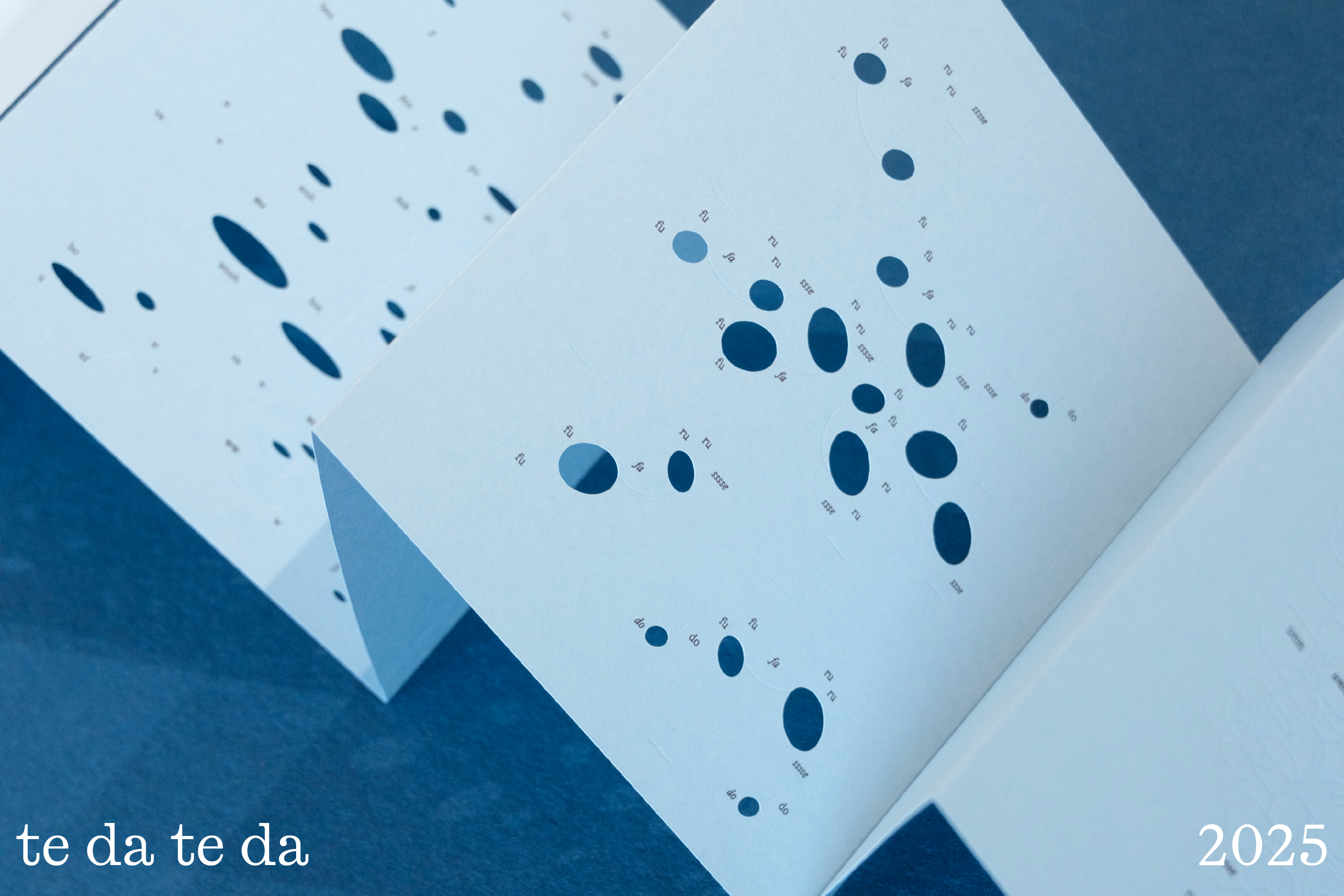
visual artist who sees the book as a form of art.









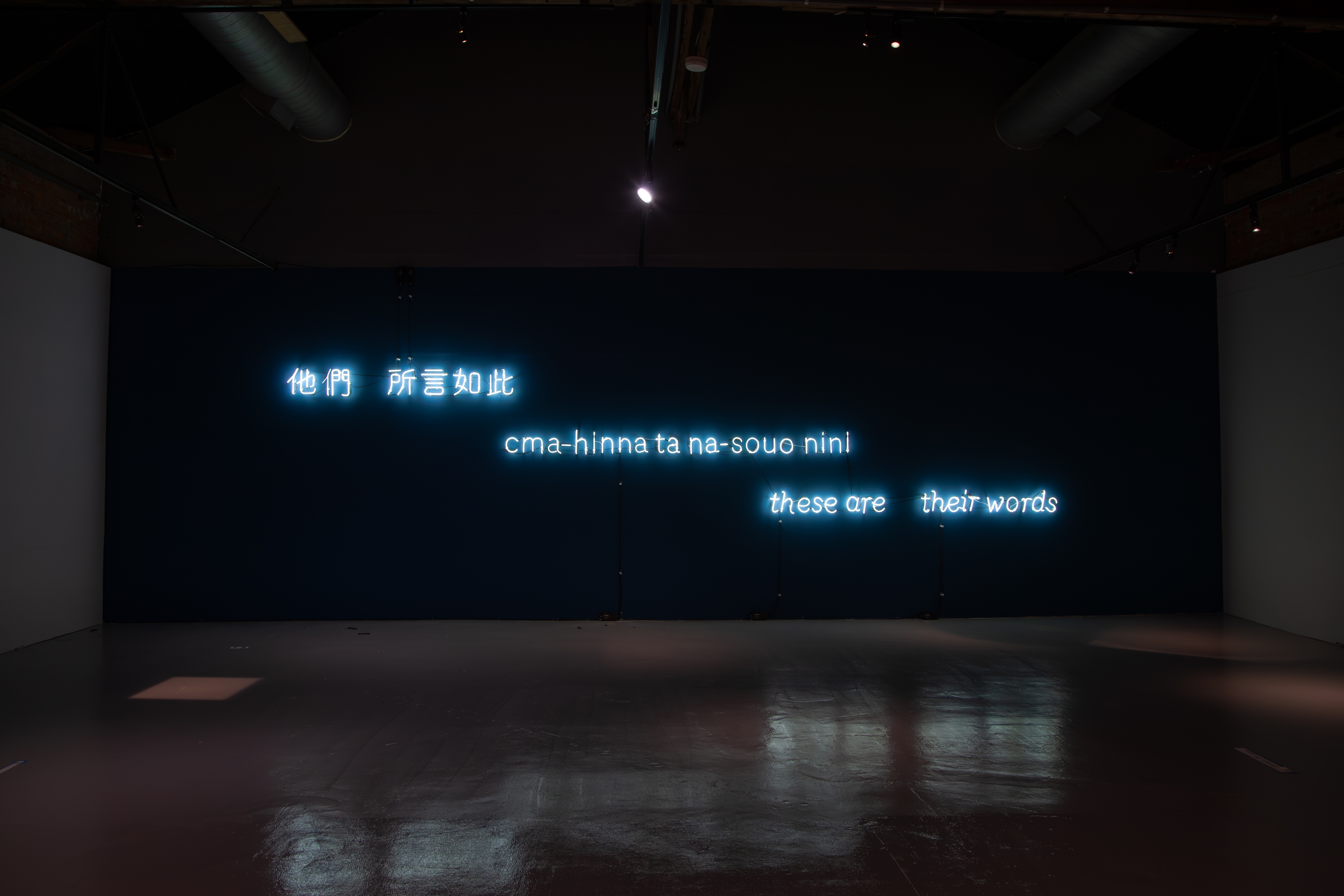
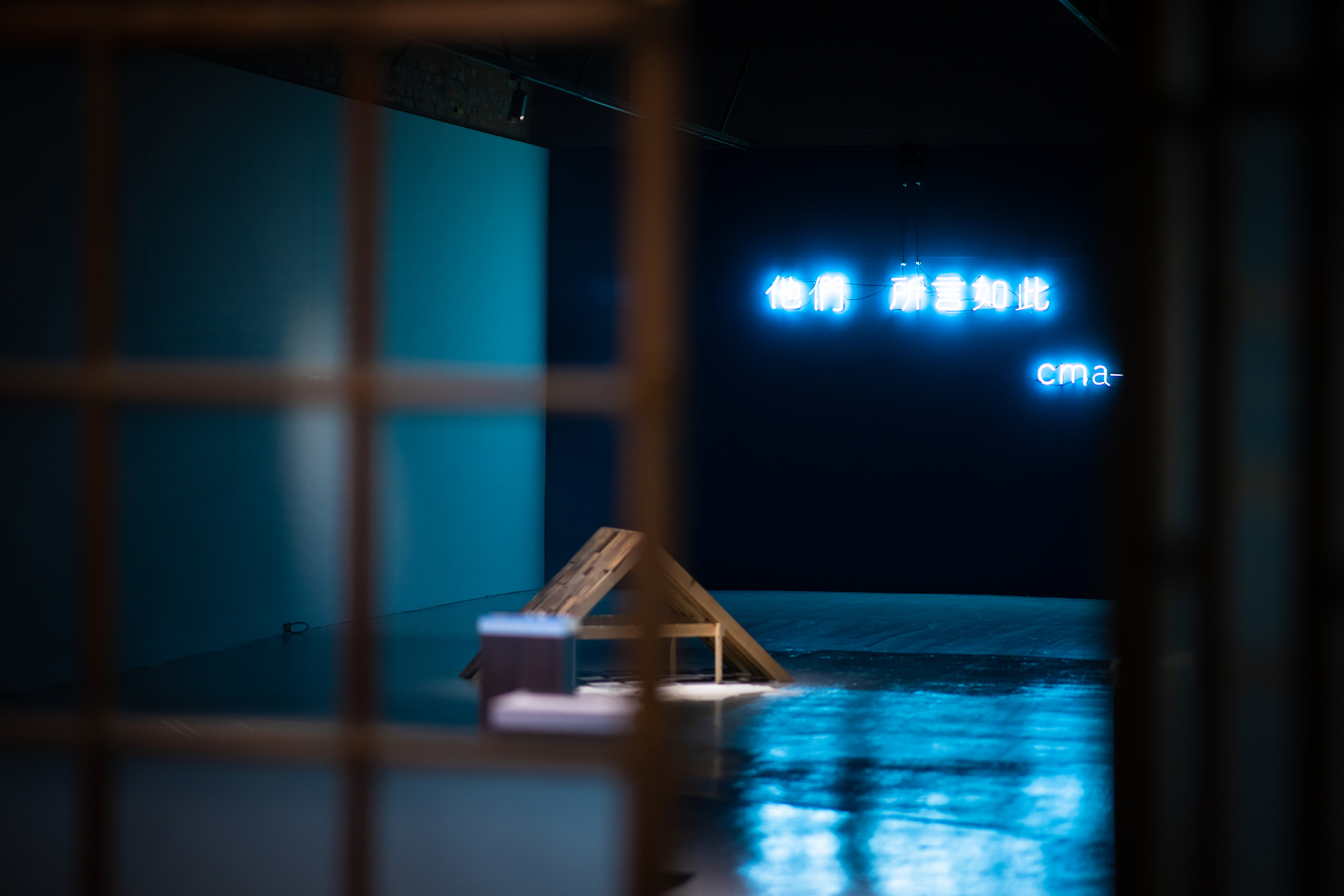
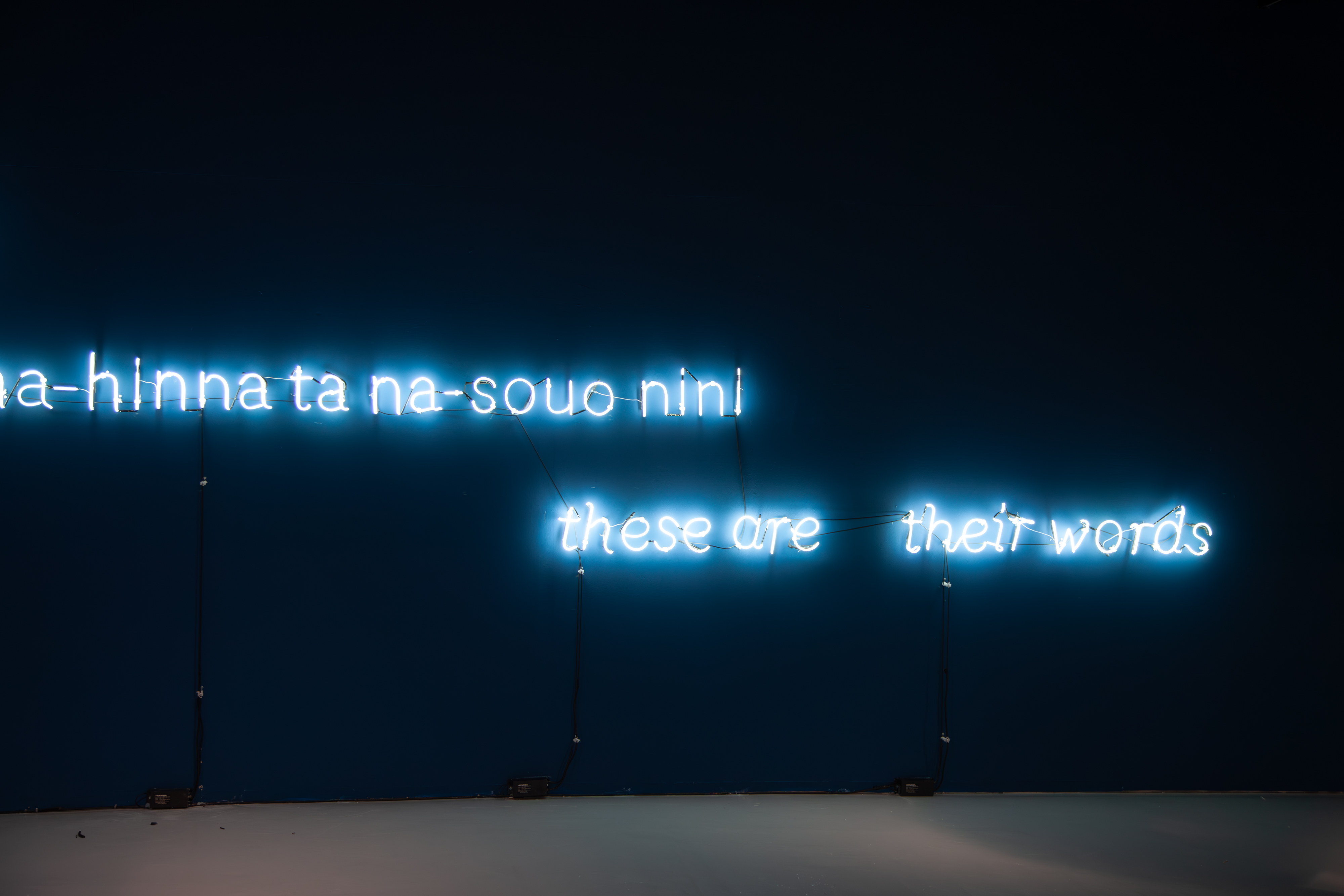
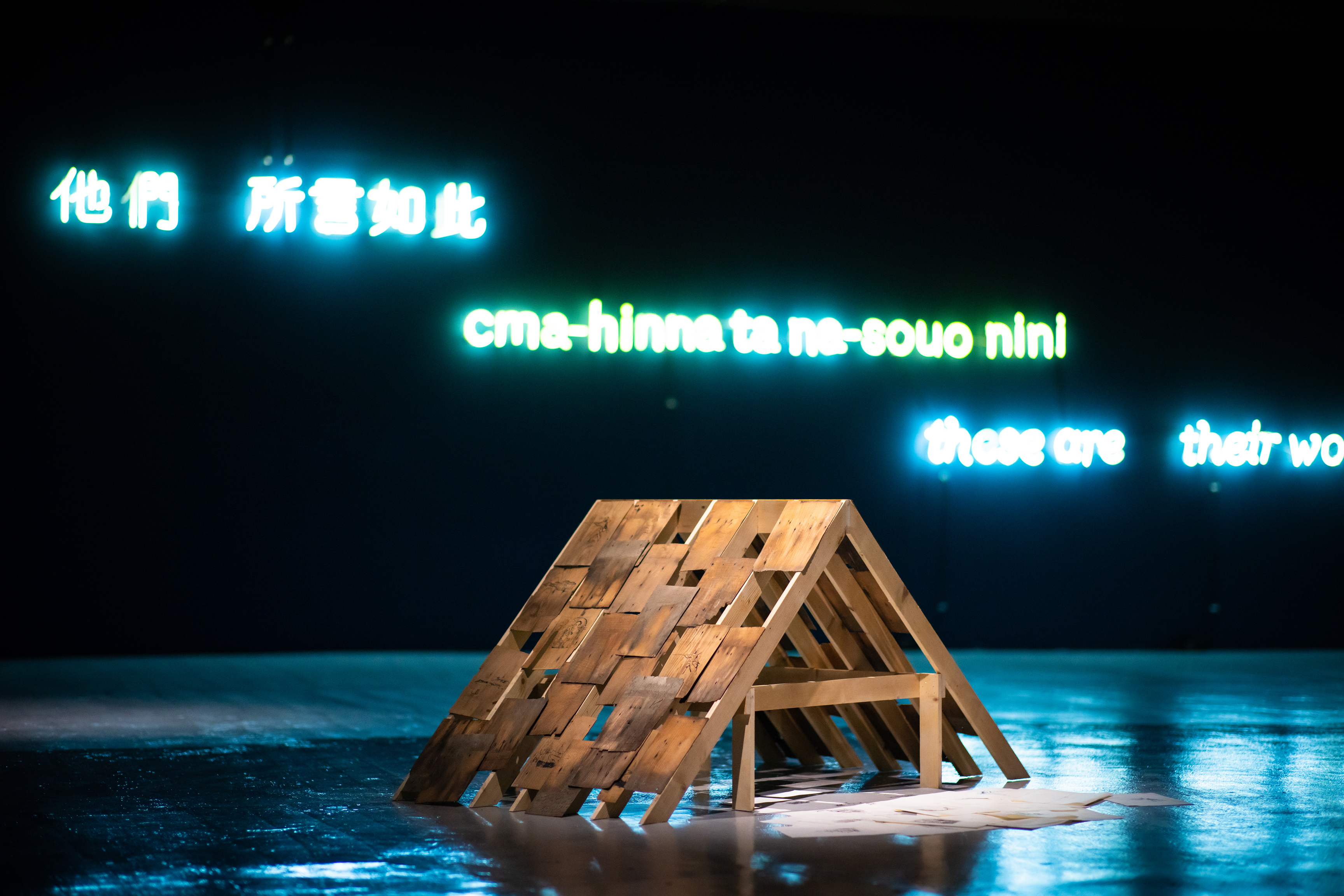
These Are Their Words
2024
White neon light, blue painted wall
200 × 30cm; 200 × 20cm; 170 × 20cm
2024
White neon light, blue painted wall
200 × 30cm; 200 × 20cm; 170 × 20cm
These words come from the Sinckan Manuscripts, land contracts written in Sirayan, Chinese, and English. The translation is quoted from Dr. Li Jen-kuei's “Research on Sinckan Manuscripts.” These contracts emerged with the arrival of colonizers who possessed writing systems.
Sirayan initially had no writing system. During Dutch colonization (1624-1662), missionaries taught Siraya people to write their language using Latin letters, creating the Sinckan Manuscripts, primarily for recording land and financial transactions.
Throughout the exhibition, pronouns like “you,” “we,” and “they” appear in various languages, excerpted from different historical texts. These pronouns do not point to specific groups or nations but remain intentionally open and ambiguous to explore identity, relationships, and the instability of language.
Sirayan initially had no writing system. During Dutch colonization (1624-1662), missionaries taught Siraya people to write their language using Latin letters, creating the Sinckan Manuscripts, primarily for recording land and financial transactions.
Throughout the exhibition, pronouns like “you,” “we,” and “they” appear in various languages, excerpted from different historical texts. These pronouns do not point to specific groups or nations but remain intentionally open and ambiguous to explore identity, relationships, and the instability of language.